Transforming the Digital Content Landscape
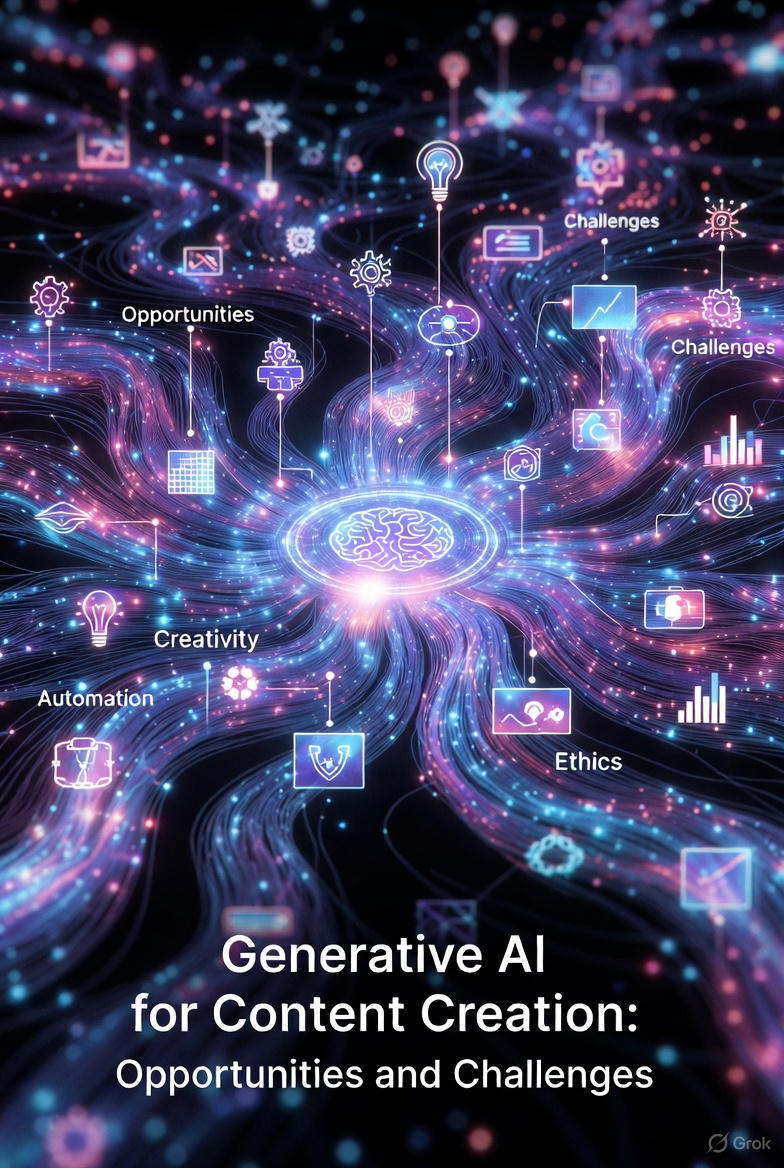
The content creation industry is experiencing a seismic shift. Generative AI tools have evolved from experimental novelties to indispensable business assets, fundamentally changing how brands, marketers, and creators produce digital content. As we navigate through 2025, understanding both the revolutionary opportunities and inherent challenges of AI-powered content creation has become critical for anyone in the digital space.
The Rise of AI Content Generation: A Market Revolution
Generative AI has democratized content creation at an unprecedented scale. What once required teams of writers, designers, and video editors can now be accomplished by individuals equipped with the right AI tools. From ChatGPT and Claude crafting compelling copy to DALL-E and Midjourney generating stunning visuals, these technologies are reshaping creative workflows across industries.
The numbers tell a compelling story. The global AI content creation market is experiencing explosive growth, with businesses reporting productivity increases of up to 40% after implementing generative AI solutions. This isn't just about speed—it's about unlocking creative possibilities that were previously resource-prohibitive.
Key Opportunities: Why Businesses Are Embracing AI Content Tools
1. Unprecedented Scalability and Efficiency
The most immediate advantage of generative AI is its ability to scale content production without proportionally scaling costs. Marketing teams can now generate dozens of social media posts, blog articles, and email campaigns in the time it once took to create just one piece. This efficiency extends beyond text to include:
- Automated video script generation with scene descriptions and dialogue
- Dynamic image creation tailored to specific brand guidelines
- Multi-language content localization in minutes rather than weeks
- Personalized content variations for different audience segments
2. Enhanced Creative Exploration and Ideation
Rather than replacing human creativity, the best use cases show AI augmenting creative thinking. Content creators use generative AI as a brainstorming partner, exploring multiple concepts rapidly before refining the most promising directions. This collaborative approach leads to more innovative outcomes while reducing creative blocks.
3. Cost-Effective Content Production
Small businesses and startups can now compete with enterprise-level content strategies without enterprise-level budgets. AI tools provide access to professional-quality content creation capabilities that were previously accessible only to organizations with significant resources.
4. Data-Driven Personalization at Scale
Generative AI excels at creating personalized content experiences. By analyzing user data and preferences, AI systems can generate customized product descriptions, email content, and recommendations that resonate with individual consumers—all without manual intervention.
5. Rapid Prototyping and Testing
Content teams can generate multiple variations of headlines, ad copy, or visual concepts instantly, enabling faster A/B testing and optimization. This accelerated iteration cycle leads to better-performing content and more informed creative decisions.
Critical Challenges: Navigating the Complex AI Content Landscape
1. Quality Control and Brand Voice Consistency
While AI can generate vast amounts of content, maintaining consistent quality and authentic brand voice remains challenging. AI-generated content often requires significant human oversight to ensure it aligns with brand values, tone, and messaging standards. The "robotic" feel of unedited AI content can damage brand credibility and audience trust.
2. Accuracy and Factual Reliability Issues
AI hallucinations—instances where models generate convincing but entirely false information—pose serious risks for content creators. Without rigorous fact-checking processes, businesses risk publishing misinformation that can harm their reputation and mislead audiences. This challenge is particularly acute in industries requiring technical accuracy or regulatory compliance.
3. SEO and Content Originality Concerns
Search engines, particularly Google, have become increasingly sophisticated at detecting AI-generated content. While AI content isn't automatically penalized, low-quality, repetitive, or unoriginal AI content can negatively impact search rankings. The challenge lies in using AI to enhance rather than replace genuine expertise and unique perspectives.
4. Ethical and Legal Uncertainties
The legal landscape around AI-generated content remains murky. Questions about copyright ownership, training data usage, and content attribution are still being resolved in courts worldwide. Content creators must navigate:
- Copyright infringement risks when AI models generate content similar to copyrighted works
- Transparency requirements about disclosing AI-generated content
- Plagiarism concerns and academic integrity issues
- Licensing and ownership questions for commercially used AI content
5. Creative Homogenization and Authenticity Loss
As more creators rely on similar AI tools trained on similar datasets, there's a risk of content homogenization. Distinctive brand voices and unique creative perspectives may be diluted when everyone uses the same AI templates and approaches. Audiences increasingly value authenticity, making purely AI-generated content potentially less engaging.
6. Job Displacement and Workforce Transformation
The automation of content creation raises legitimate concerns about employment in creative industries. While AI creates new roles (prompt engineers, AI content strategists), it also displaces traditional positions. Organizations must thoughtfully manage this transition to retain institutional knowledge while embracing new technologies.
Best Practices: Maximizing AI Content Creation Success
Implement a Human-AI Collaboration Model
The most successful content strategies treat AI as a collaborator rather than a replacement. Use AI for initial drafts, idea generation, and routine tasks while reserving strategic thinking, brand voice refinement, and quality control for human experts.
Establish Rigorous Review Processes
Create clear workflows that include human review, fact-checking, and editing for all AI-generated content. Implement style guides specifically for AI tools to maintain brand consistency.
Prioritize Transparency and Authenticity
Be honest with audiences about AI usage where appropriate. Focus on adding genuine human insight, expertise, and perspective to AI-generated foundations.
Invest in Training and Upskilling
Equip your content team with the skills to effectively prompt, edit, and optimize AI-generated content. Understanding AI capabilities and limitations is crucial for maximizing value.
Monitor SEO Performance and Algorithm Changes
Stay current with search engine guidelines regarding AI content. Focus on creating genuinely valuable, original content that serves user intent rather than gaming algorithms.
The Future of AI-Powered Content Creation
The trajectory is clear: generative AI will become increasingly integrated into content creation workflows. Future developments will likely include:
- More sophisticated personalization using real-time behavioral data
- Improved multimodal content generation seamlessly combining text, images, video, and audio
- Better brand voice modeling that captures nuanced tones and styles
- Enhanced fact-checking capabilities built directly into generation models
- Regulatory frameworks providing clearer guidelines for ethical AI content use
Conclusion: Embracing Opportunity While Managing Risk
Generative AI represents both transformative opportunity and significant challenge for content creators. Success in this new landscape requires balanced thinking—leveraging AI's efficiency and scalability while preserving the human creativity, strategic thinking, and authentic voice that truly resonate with audiences.
Organizations that thoughtfully integrate AI tools into human-centered workflows, maintain high quality standards, and navigate ethical considerations responsibly will gain competitive advantages in content creation. Those who rely exclusively on either purely human or purely AI approaches will likely struggle to keep pace.
The future belongs to creators who master the art of human-AI collaboration, using technology to amplify rather than replace human creativity and expertise.